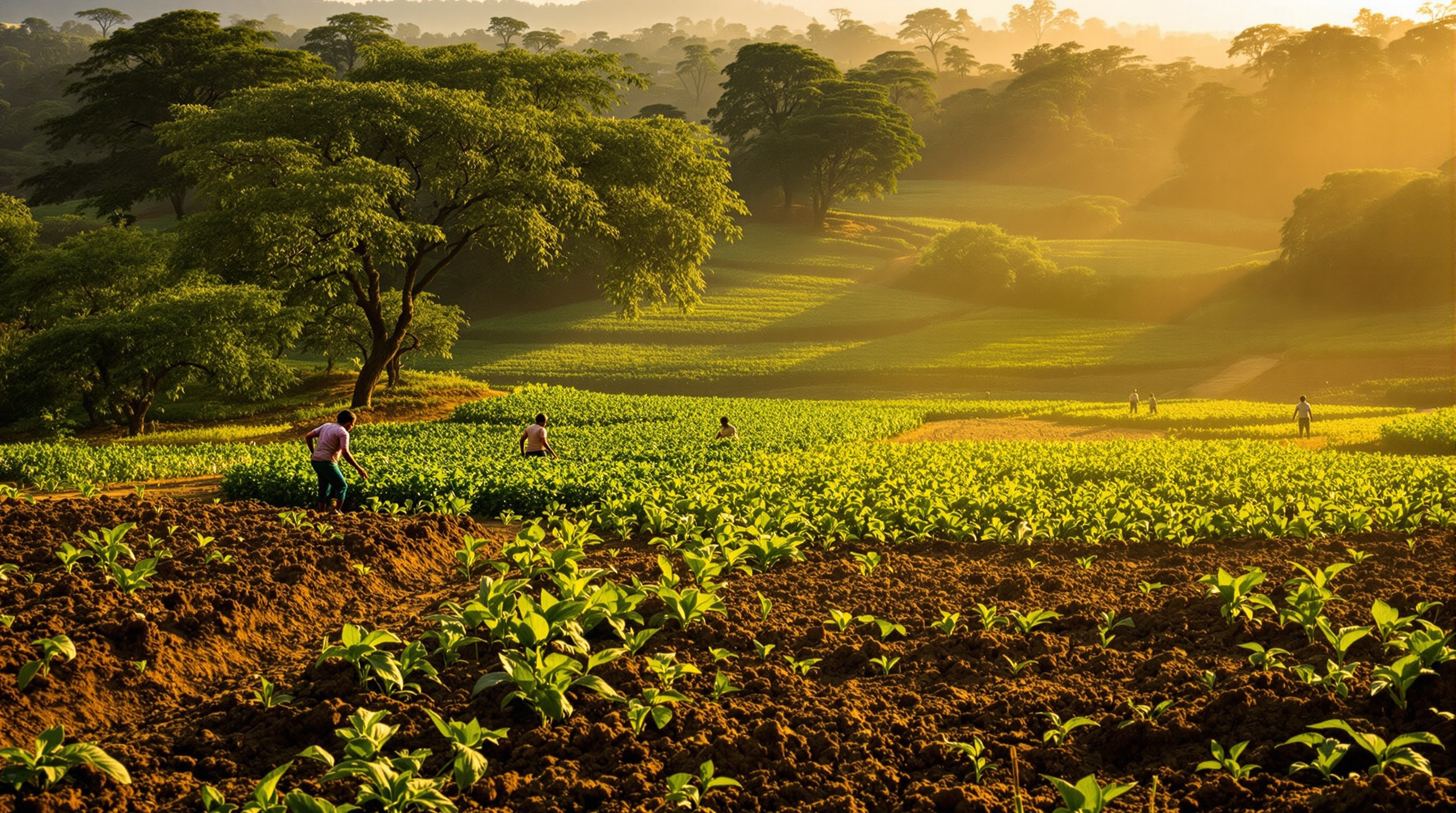
SDG 2: Zero Hunger — Carbon and Food Security Are the Same Work
When iRise Carbon restores land and distributes cookstoves, it is not just capturing carbon. It is protecting the food systems that millions of Malawians depend on.
When iRise Carbon restores land and distributes cookstoves, it is not just capturing carbon. It is protecting the food systems that millions of Malawians depend on.
SDG 2 — Zero Hunger — calls for an end to hunger, the achievement of food security, improved nutrition, and the promotion of sustainable agriculture. It sits second on the list of Sustainable Development Goals because hunger, like poverty, is foundational. Communities that cannot feed themselves cannot invest in education, health, or economic development. Everything else waits.
In Malawi, where over 80 percent of the population depends on smallholder agriculture for food and income, food security is inseparable from land health. And land health is inseparable from the carbon work iRise Carbon does every day.
This is not a stretch. It is a direct causal relationship — one that our MRV framework now documents alongside carbon outcomes.
“Restored land is not just a carbon sink. It is the foundation of the food security that smallholder farming communities in Malawi depend on.”
How land restoration delivers SDG 2 outcomes
The connection between iRise Carbon's reforestation programme and food security operates through four specific pathways:
- Microclimate stabilisation — restored vegetation cover moderates local temperatures and maintains the moisture cycles that determine whether a cropping season succeeds or fails. In degraded landscapes, the loss of tree cover accelerates soil drying, raises surface temperatures, and breaks the rainfall patterns that smallholder agriculture is calibrated to. Restoration reverses this process at farm level.
- Soil health restoration — restored land cover stops erosion, returns organic matter to degraded soils, and rebuilds the biological activity that makes agricultural land productive. Adjacent farmland benefits directly: when restored forest stops a hillside from eroding, the farm at the bottom keeps its topsoil.
- Agroforestry integration — iRise Carbon's land restoration programme incorporates agroforestry components that directly improve food production on and around project sites. Shade trees that reduce crop water stress, nitrogen-fixing species that restore soil fertility, and fruit trees that diversify household nutrition are all part of the design.
- Watershed and irrigation support — restored land increases groundwater recharge and stabilises seasonal water flows. For smallholder farmers who depend on seasonal streams and shallow wells for supplementary irrigation, this is a direct food security benefit.
How cookstoves deliver SDG 2 outcomes
The connection between clean cookstoves and food security is less immediately obvious — but equally real.
In communities that depend on firewood and charcoal for cooking, gathering fuel is a significant time burden — disproportionately carried by women and children. Studies across sub-Saharan Africa consistently find that fuel gathering takes two to four hours per day in areas of high wood fuel dependence. When a clean cookstove reduces fuel consumption by 60 percent, that time is freed for other activities.
In agricultural households, that freed time goes partly into food production — more time for planting, weeding, and harvesting. More time for small-scale food processing and market trading. More time for food preparation itself, which directly improves nutrition outcomes for children.
The connection is direct. The mechanism is documented. And it is a co-benefit of the same credit that delivers the carbon outcome.
“One iRise Carbon credit. Verified carbon. Restored land. Protected harvests. Freed time. Documented food security. The same work — all of it.”
What this means for buyers and reporters
For corporate sustainability teams reporting against the SDGs, iRise Carbon land restoration and cookstove credits provide documented co-benefit evidence across SDGs 2, 6, 13, and 15 — from a single credit purchase.
Our MRV framework documents food security co-benefits alongside carbon outcomes in every monitoring report. Buyers who need multi-SDG reporting evidence can request the supporting data for their specific credit batch.
On Wednesday, our Integrity Series article explains what full, transparent reporting actually looks like — and why the ability to show the data is the difference between a claim and a commitment.
www.irisecarbon.com · Carbon with Integrity
iRise Carbon
Published 11 May 2026
Week 7 · All Three Articles
Explore the full week's content
MondayYou're hereSDG 2: Zero Hunger — Carbon and Food Security Are the Same Work
 Wednesday
Reporting You Can Stand Behind — What Full Transparency Actually Looks Like
Read Friday
Meet Joseph Msuku — Head of IT, iRise Carbon
ReadMore Stories
All News
SDG 3: Good Health and Well-Being — The Climate Credit That Saves Lives
SDG 1: No Poverty — Carbon Finance as the World's Most Direct Anti-Poverty Tool